
Quantum Career for STEM Under Graduates (Non-IT)
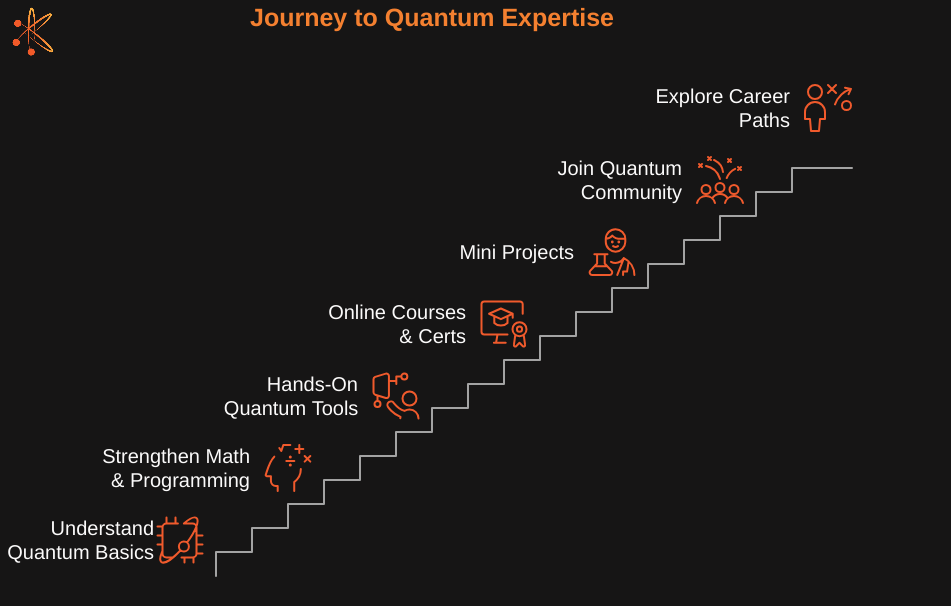
Step 1: Understand What Quantum Computing Is
What to Learn:
- Qubits, superposition, entanglement
- Quantum gates and circuits
- Difference between classical and quantum computing
Resources:
- IBM Quantum Intro Series
- Quantum Country
- Qiskit Textbook
Step 2: Strengthen Your Math & Programming Foundations
As an Under graduate in STEM Background, you already have a head start in math!
Key Topics:
- Linear Algebra: Vectors, matrices, eigenvalues
- Probability Theory
- Complex Numbers
- Basic Python Programming
Tools:
- Khan Academy (Math)
- W3Schools or Code academy (Python)
- Veritasium YouTube
- 3Blue1Brown YouTube
- Prof.Gilbert Strang MIT YouTube
Step 3: Start Hands-On with Quantum Tools
Begin with:
- IBM Quantum Composer – No coding needed, visual circuit builder
- Qiskit – Python-based SDK for real programming
- Amazon Braket
- Microsoft QDK
- Quantum Rings SDK
- and other suitable frameworks of your choice
Try these projects:
- Build a Bell State circuit
- Simulate quantum teleportation
- Run Grover’s algorithm
Step 4: Take Free Online Courses & Certifications
Beginner-Friendly Courses:
- Qiskit Global Summer School (YouTube)
- Introduction to Quantum Computing (edX – TU Delft or MIT)
- Quantum Machine Learning (Xanadu Academy)
Many of these give certificates to boost your resume!
Step 5: Work on Mini Projects
Examples:
- Quantum-inspired optimization for structural analysis
- Simulating quantum vibrations in mechanical systems
- Quantum cryptography for secure robotic control systems
Projects show that you’re serious and creative.
Step 6: Join the Community
Communities to Join:
- KwantumG Community
- Qiskit Slack
- Quantum Computing India
- KwantumG programs and internships
- Discord groups
Step 7: Explore Career Paths
Roles you can aim for in the next 2–5 years:
- Quantum Developer (Python + Qiskit)
- Quantum Research Intern (at research labs or universities)
- Quantum Simulation Engineer (great for Mech + QC combo!)
- Quantum ML Enthusiast (if you explore AI/ML crossover)
Bonus Tips for You:
- Do a minor/online specialization in quantum or AI if possible
- Apply for internships with quantum startups or labs
- Contribute to open-source quantum libraries
- Stay updated via newsletters like “Quantum Weekly”